

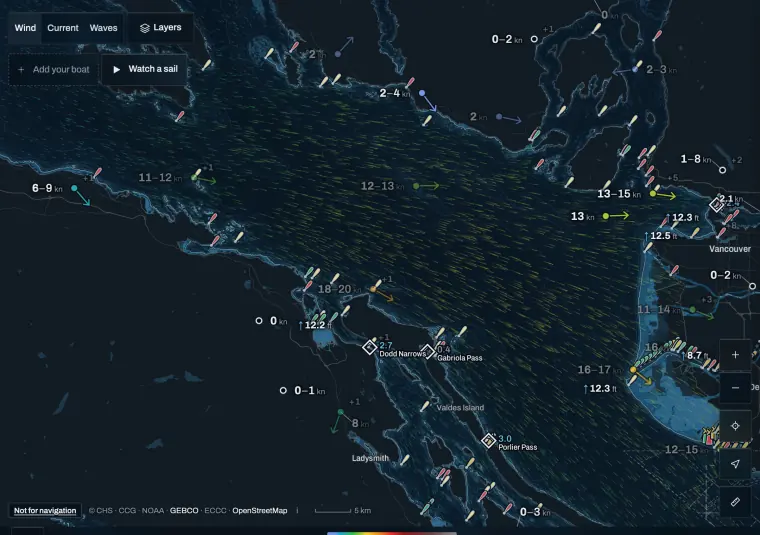
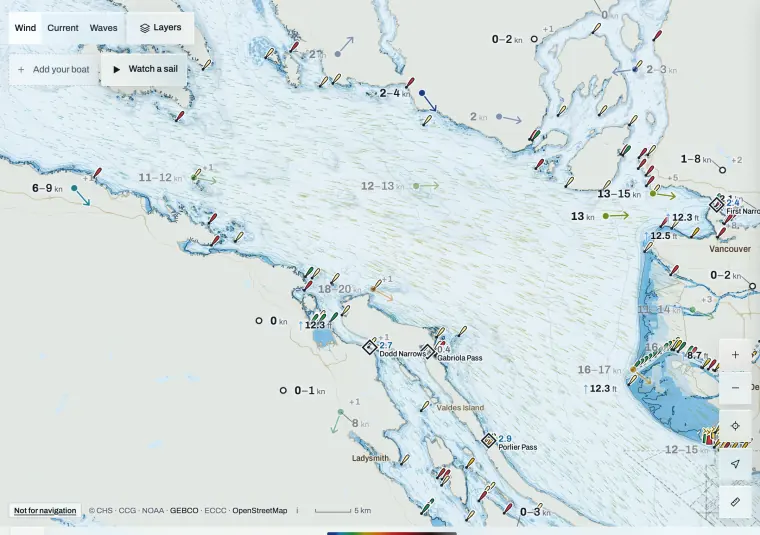
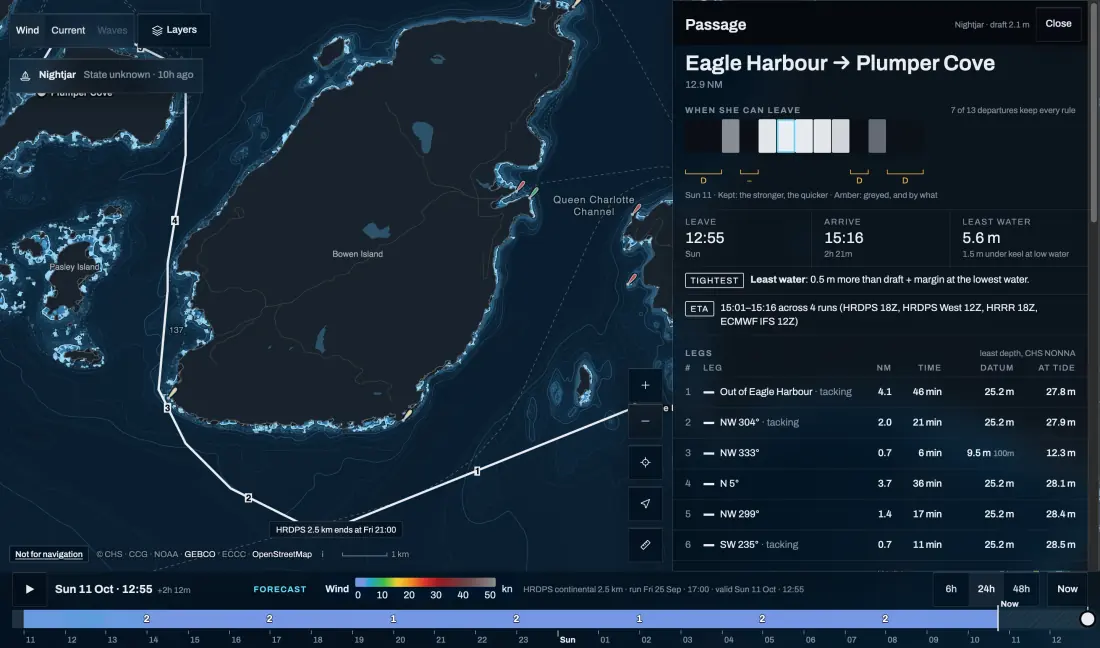
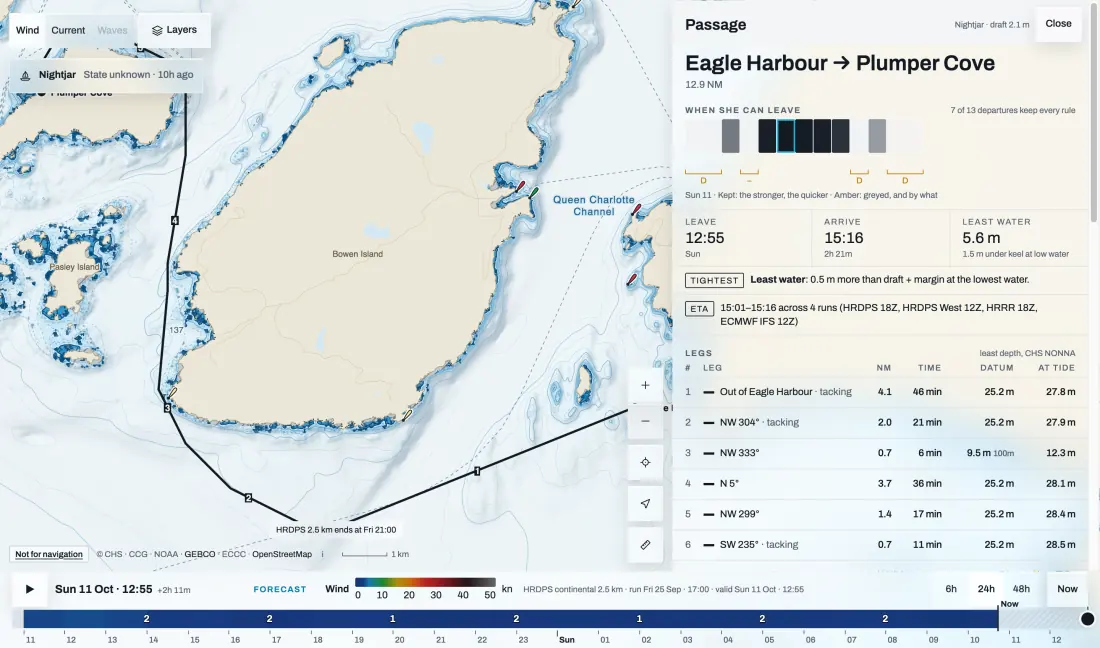
Break the trip into legs and times
Each leg meets the forecast for a different hour.
A 30 NM passage at 6 kn takes five hours; at 5 kn it takes six. That hour moves your arrival into a later forecast window, and the open-water leg into a different part of the day. A router does this sum for every departure time at once.
Read three views
The marine forecast, the model wind, and the stations.
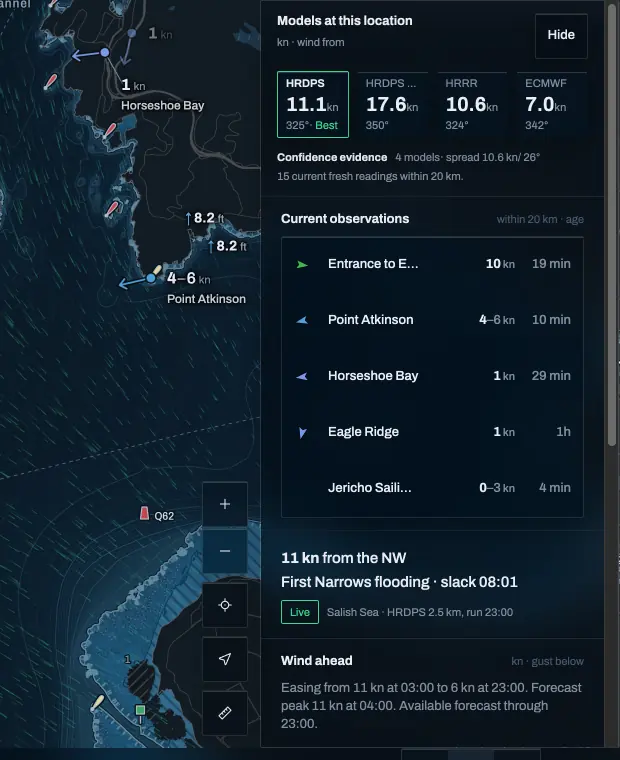
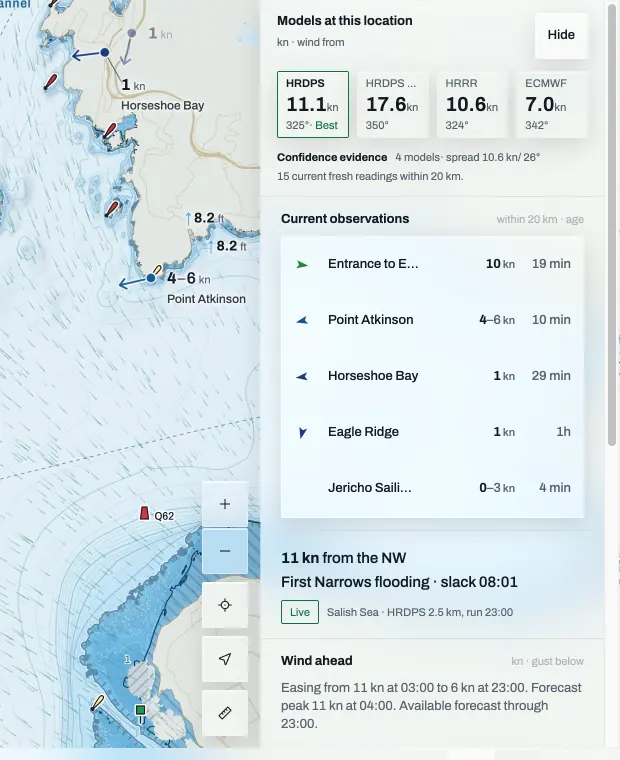
The official marine forecast and warnings cover the area. Model guidance gives detail by hour and place. Stations tell you what is happening now.
- A sheltered station can read light while the open water is blowing.
- A reading more than an hour old is history, not now.
- Differences between stations are clues; check their exposure first.
Time the passes
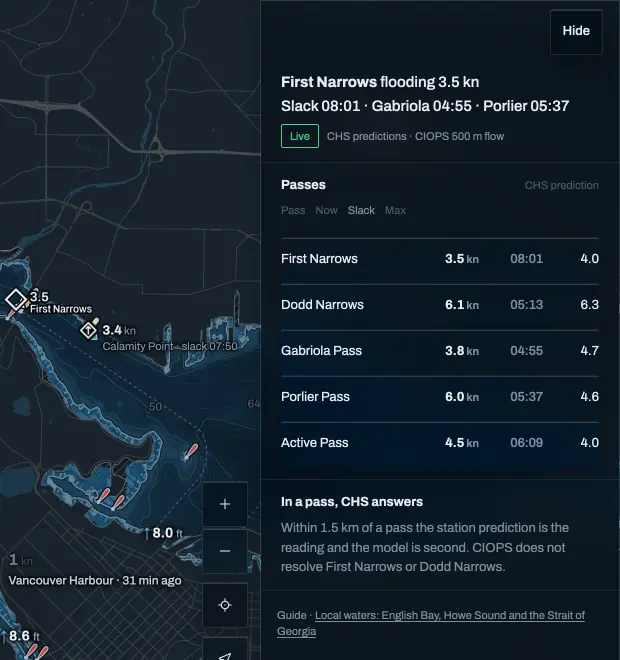
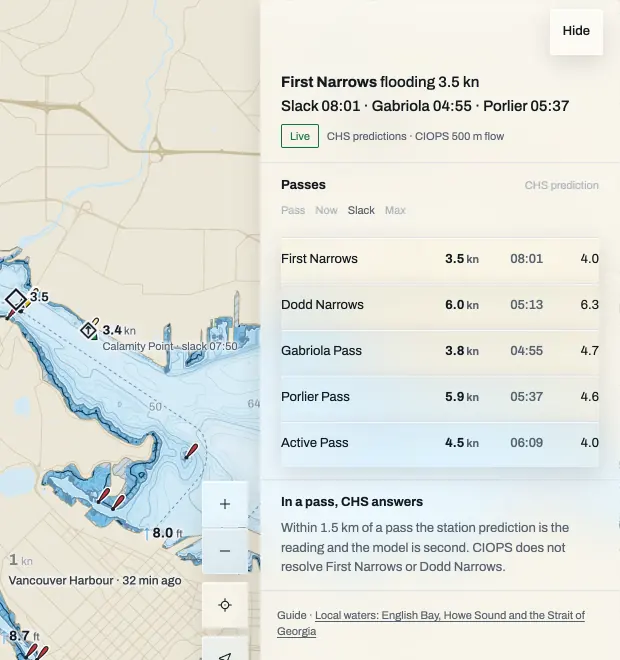
At a narrow pass, the current can be faster than you.
Use CHS predictions for the pass itself. Aim to arrive in a slack window or with a fair current, and know when the next maximum arrives in case you are late.
Wind against current
The same wind builds a much steeper sea when it blows against the current.
Check where on the route the current will oppose the forecast wind, and at what time. A 15 kn westerly against a strong ebb is a different sea from 15 kn with it, so read the current for a pass or a river mouth at the same hour as the wind.
Update underway
Compare progress with the plan at each leg.
If you are an hour behind, the arrival forecast has changed: read it again. Make the turn-back decision at the point you agreed, not halfway across.
Sources and review
Official references checked on 2026-10-11. Product details and schedules change; the provider’s page is the current word.