

About Telltale
Telltale shows you what the wind, tide and current are doing now and what they’ll do next, plans your route through them, and afterwards shows you how you actually sailed.
It runs on iPhone, Android, Apple Watch, Garmin watches, the web, Mac and Windows, and it’s built in Vancouver by Arek Sredzki, a sailor and physical AI engineer.
Record your next sail from your phone, your watch or a computer on the boat.
At a glance
- Live conditions
- Public stations and buoys, plus your own boat’s instruments
- Forecasts
- Our own models, trained on years of global forecasts and sensor data, updated in real time
- Routing
- Passage and race routes planned around the forecast, the tide and charted depths
- Race analysis
- Every tack measured against your polars, alongside the course and the fleet
- Runs on
- iPhone, Android, Apple Watch, Garmin, the web, Mac and Windows
- Built by
- Arek Sredzki, with 20 years of sailing and software experience
What Telltale does
Conditions now
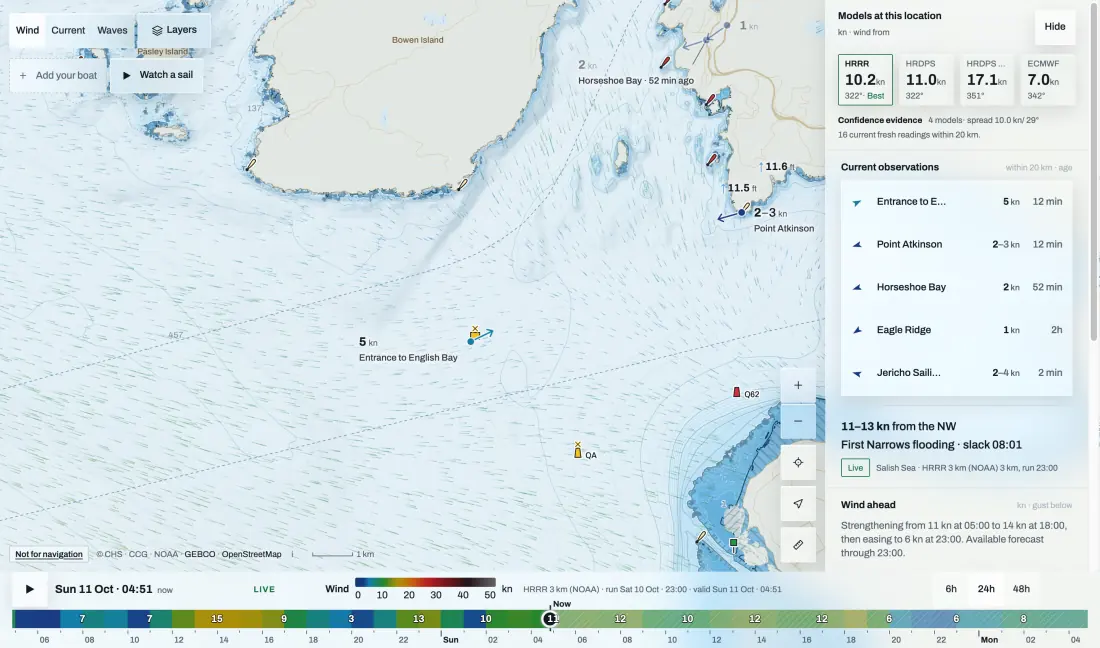
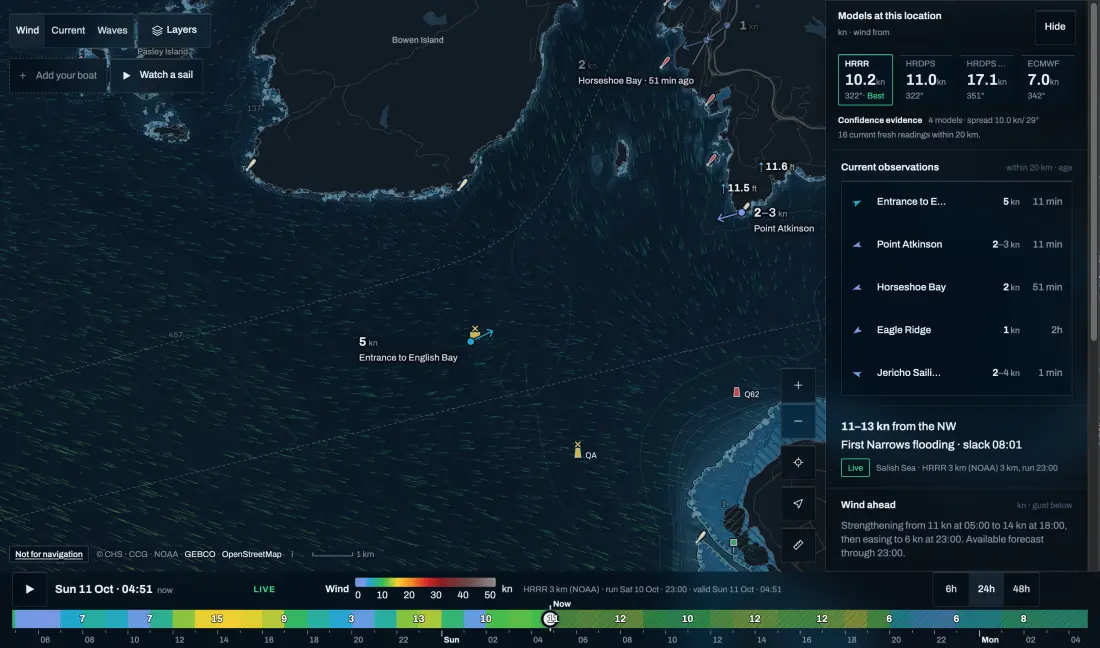
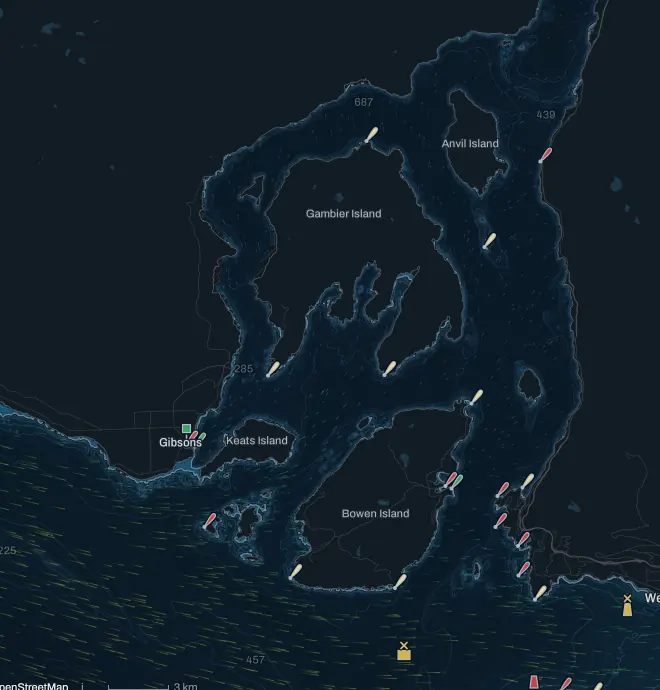
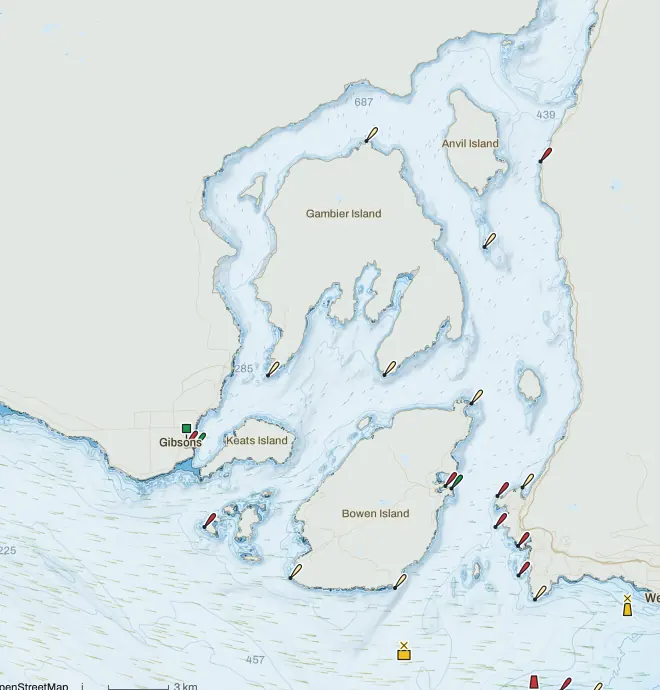
Every station and buoy around the Salish Sea on one chart, updated as they report. Tap a pass to see the current and the next slack.
Open Conditions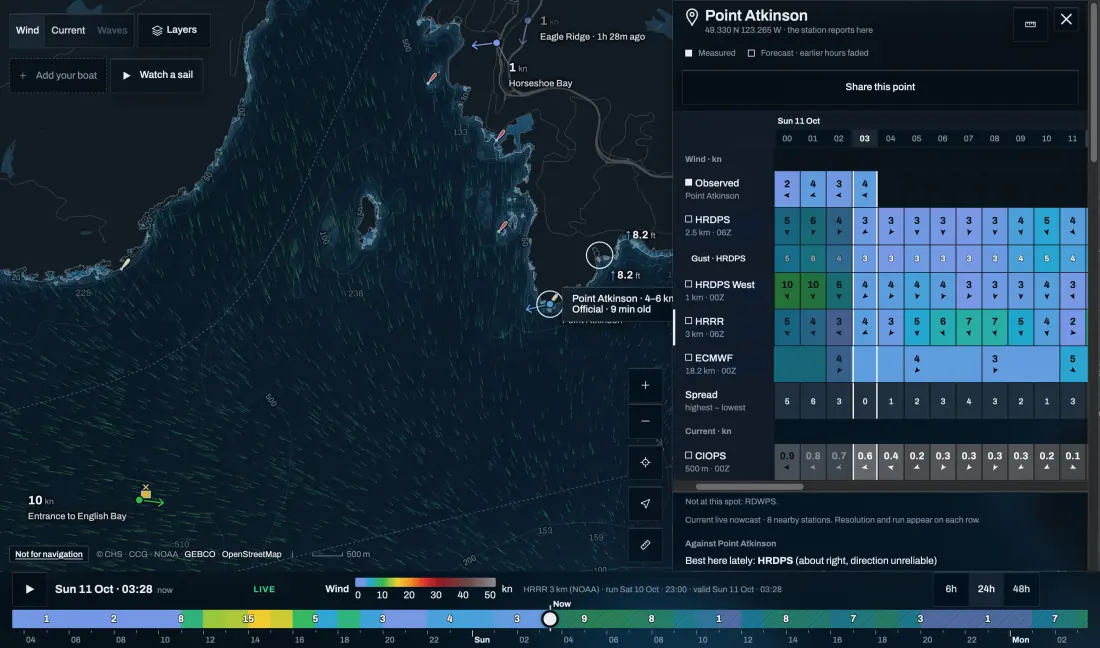
Forecasts you can check
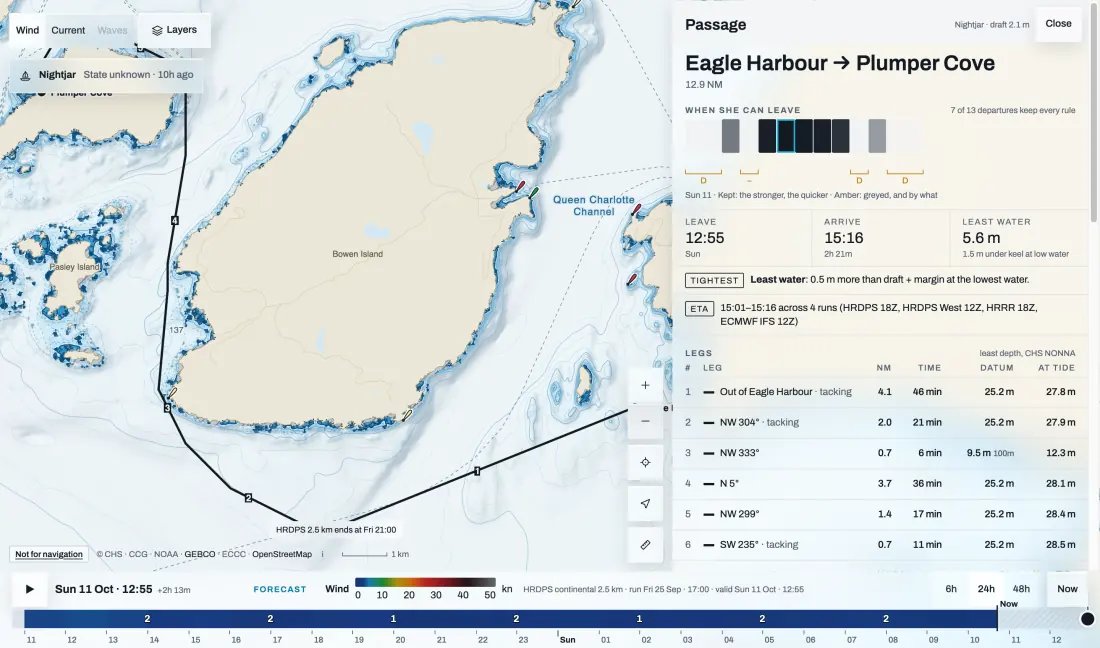
Compare HRDPS, HRRR, ECMWF and other models side by side, each with its run time, against what the nearest station actually measured.
Weather models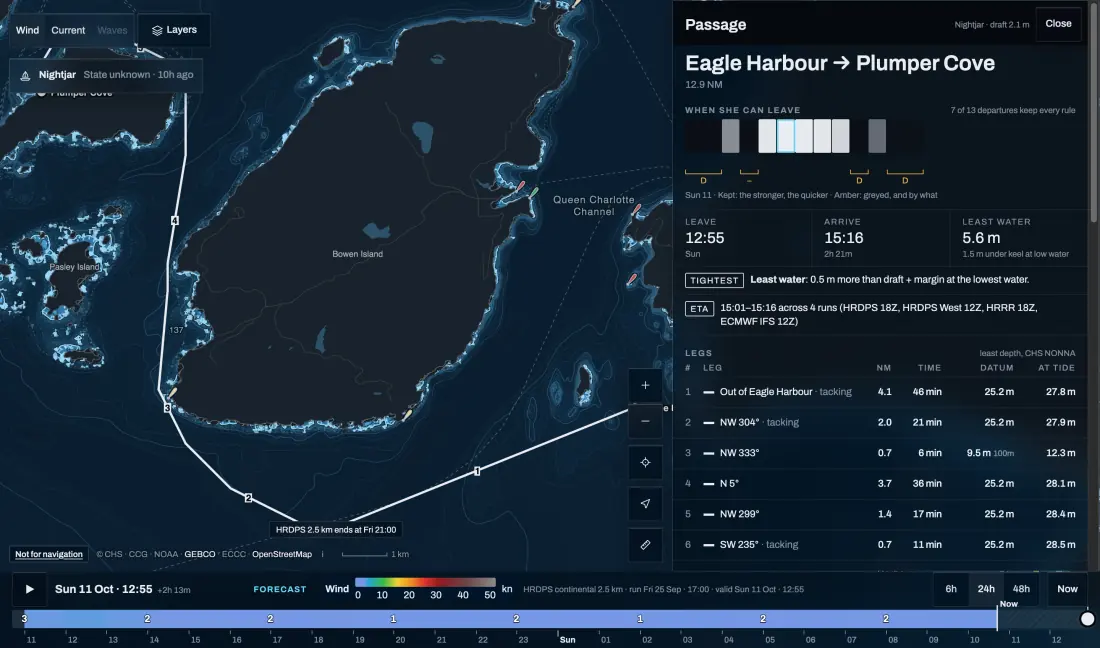
Routing
Pick a destination and Telltale plans the passage around the forecast, the tide and the charted depth, leg by leg, with an arrival time.
Plan a route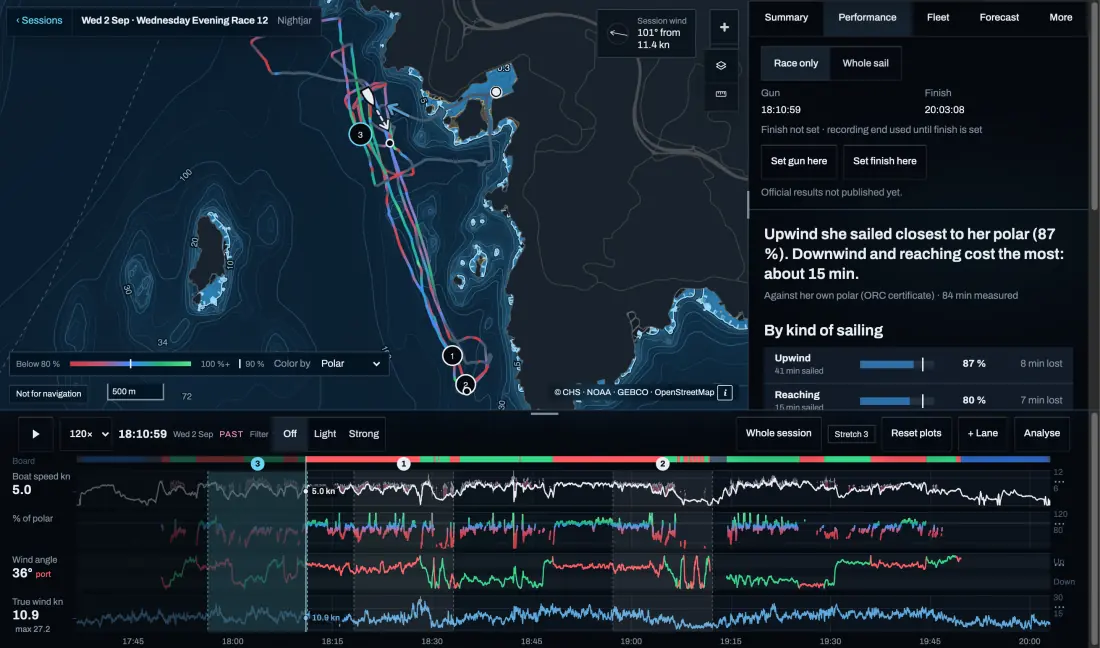
Race analysis
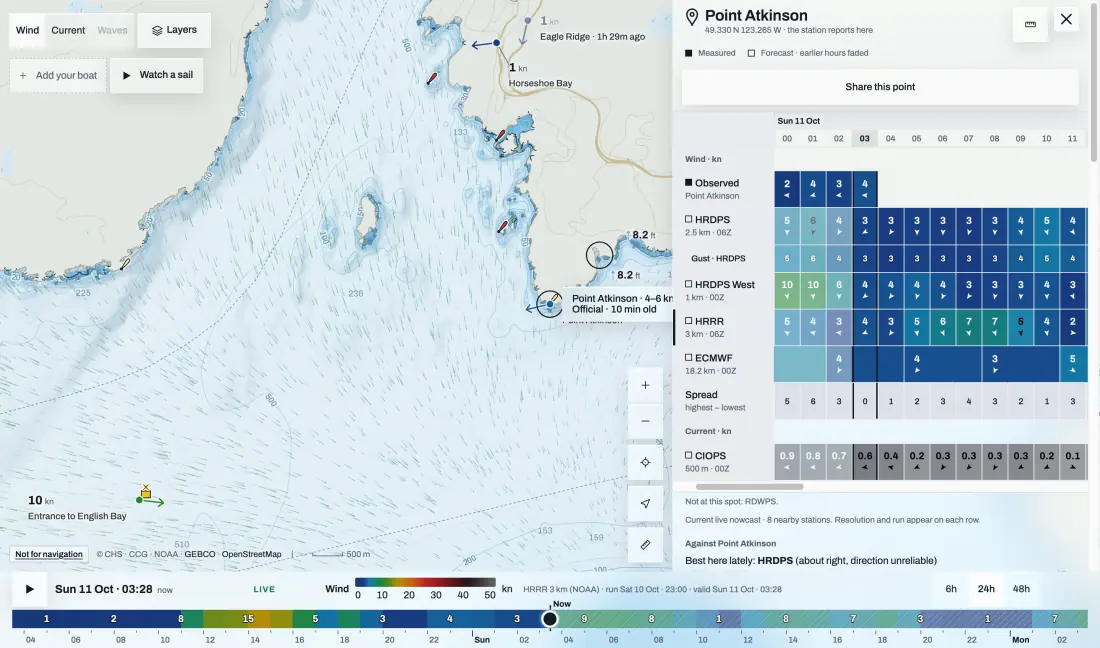
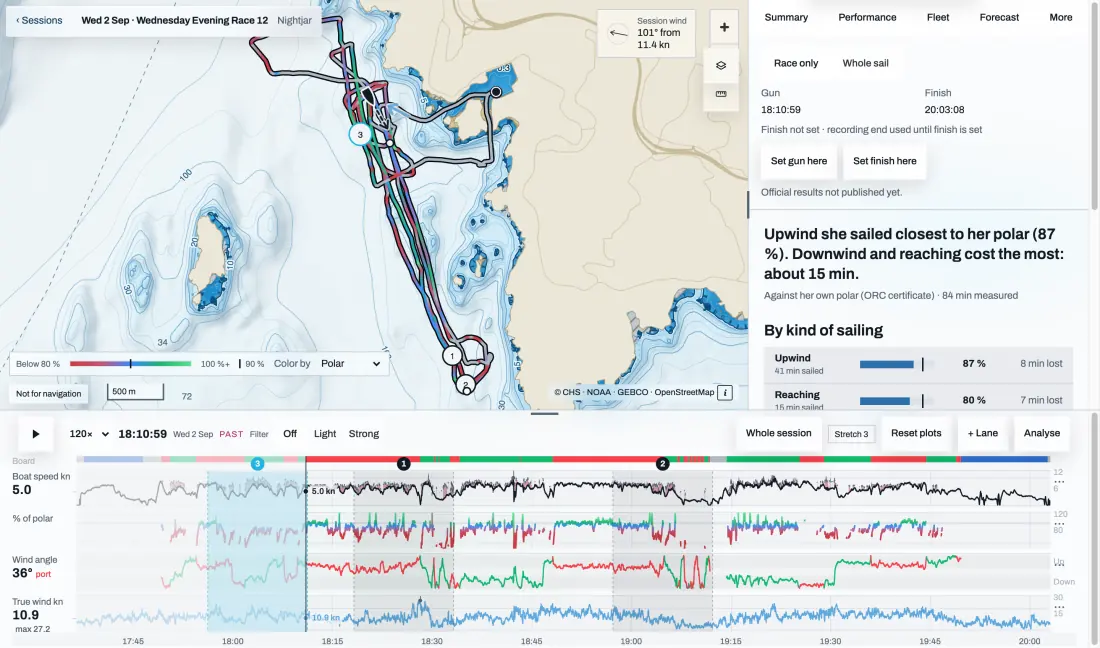
Record from a phone, a laptop or a computer on the boat. Afterwards, replay the race tack by tack against your polars, with the course and the boats around you.
Record and review
Forecasting
Local knowledge, built into the forecast
Telltale trains its own models on years of global weather forecasts and real sensor measurements from stations, buoys and boats. They correct each new model run with what the sensors are reporting right now, producing high-resolution nowcasts and forecasts that update in real time and are built to beat the raw models where you sail.
Even the best weather models see the coast in grid squares kilometres wide. They miss the headland that bends the breeze, the inlet that funnels it and the forest that blocks it. Telltale reads the shape of the land and the seabed, learns how the wind and current behave around them from years of real sails and station records, and pulls each forecast toward what stations, buoys and boats are measuring right now.
Telltale archives every forecast and reading, and checks each model against what actually happened, station by station. Its own forecasts are held to the same standard. New methods are tested on days they have never seen before they reach the app.
Built by a physical AI expert
I’m Arek Sredzki, and I’ve been sailing and writing software for 20 years. I grew up racing 29ers on the water around Vancouver and spent a few summers teaching sailing.
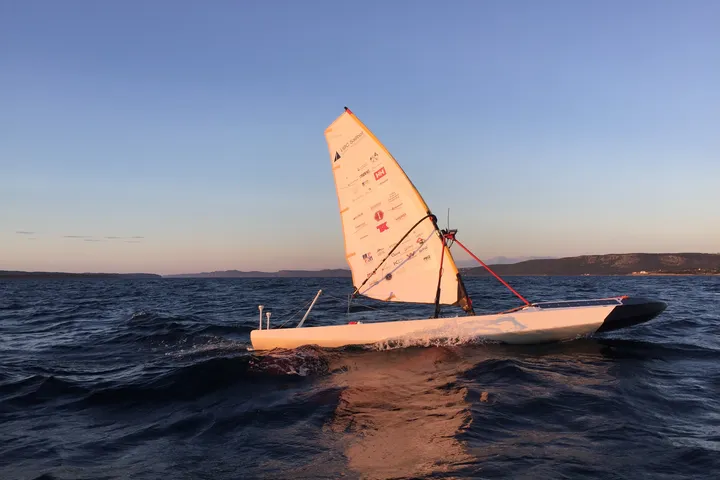
At the University of British Columbia I was the software lead for UBC Sailbot, the student team that builds autonomous sailboats. We won the International Robotic Sailing Regatta, and we launched Ada, which set the record at the time for the longest distance sailed autonomously across the Atlantic. Planning her course meant working out how to route a boat on her own polars through weather forecasts that kept changing while she sailed. It’s the same problem Telltale’s routing tackles today.
For the last decade I’ve worked at the forefront of autonomous driving and safety-critical robotics. At Tesla I trained the end-to-end neural networks that power Full Self-Driving (FSD), led and shipped Actually Smart Summon, and helped develop and ship fully driverless robotaxis.
Training AI that has to perform in the real world teaches you what matters: real-world data at scale, models that learn from it, and proof against reality before anything ships. Telltale’s forecasting and analysis are built the same way, so every sailor gets the local knowledge and debriefs that used to take a professional navigator and coach.
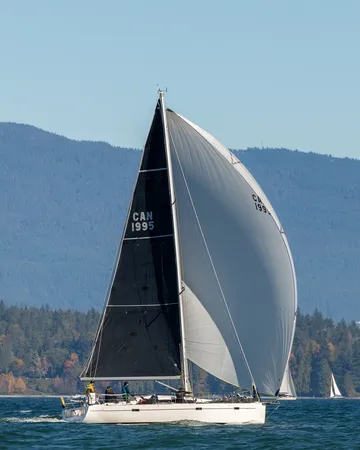
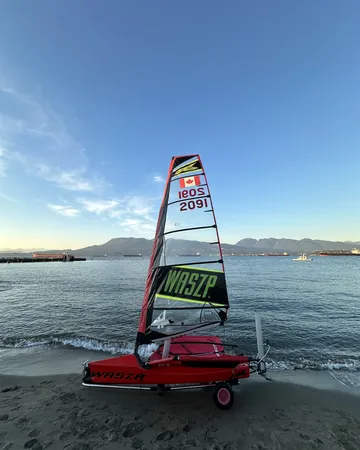
These days I skipper Off Piste, a Salona 41, and we race her regularly out of Vancouver. I also sail a WASZP, which keeps me close to the foiling and skiff fleets. We test new features against our own recorded races before they ship.
Engineering
The principles behind Telltale
- Every number has a source
- A reading carries its station and time. A forecast carries its model, run and valid time. When Telltale adjusts a forecast with live data, it says so.
- Uncertainty stays visible
- When the models disagree, Telltale shows the spread side by side. It doesn’t quietly pick one and present it as the answer.
- Dropouts are never hidden
- When a feed or an instrument goes quiet, Telltale marks its last value with its age instead of passing it off as current.
- Analysis never replaces the data
- Tacks, percent of polar and highlights are derived from the recording. The raw readings stay available underneath, and a gap stays a gap.