

Tide is not current
High water and slack are different events.
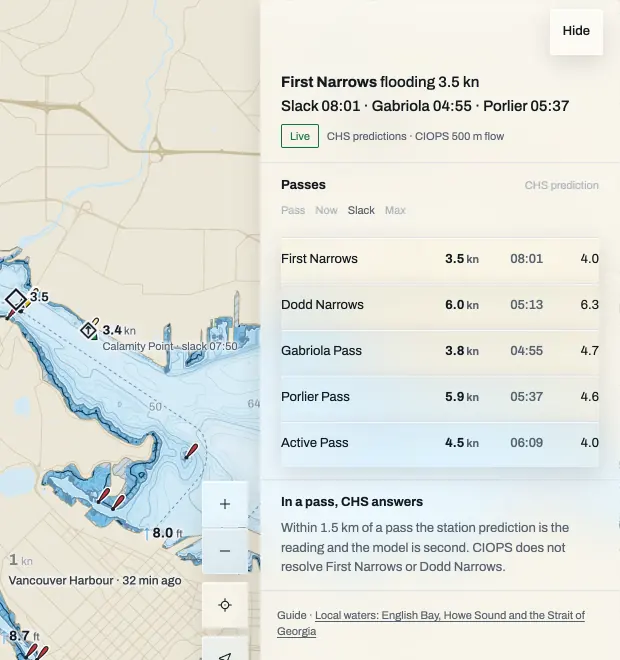
At many passes the current keeps running for an hour or more after high or low water. Use current predictions for timing, and tide heights for depth.
References 1
Flood, ebb and slack
Current builds from slack to a maximum and back.
The flood runs in, the ebb runs out. Slack is the turn, and it can be brief. Maxima differ through the day.
References 2
Reading the predictions
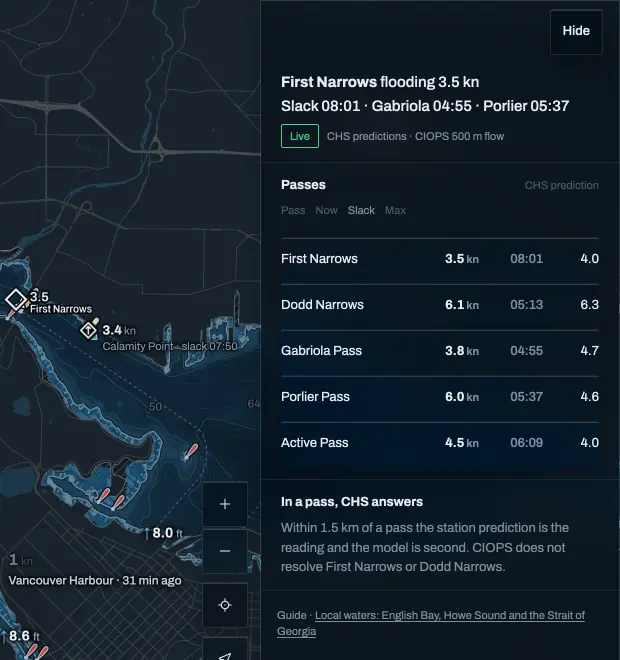
Each station gives times and rates of slack and maximum flow.
CHS publishes them in the tables and through the IWLS service that Telltale reads. Rates are in knots; flood and ebb directions are given per station.
- Use the station at your pass, not a nearby tide station.
- Times are local; check daylight time.
- Predictions don’t include wind or river flow.
Channels, points and back-eddies
Current is fastest in the middle of a channel and off points.
Behind a point the flow can reverse in a back-eddy. Close to shore you may find slack or even a fair current while the middle runs against you.
SOG, STW, set and drift
The current is the difference between where you point and where you go.
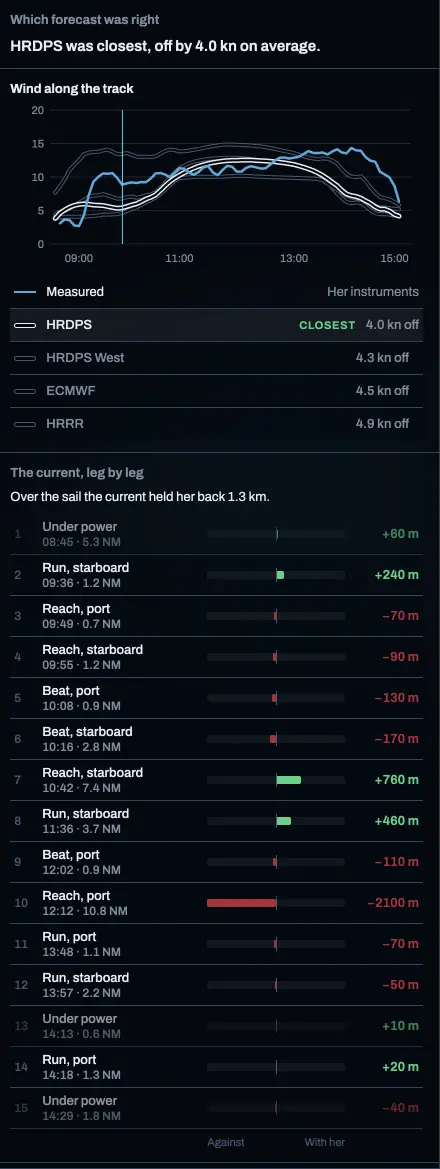
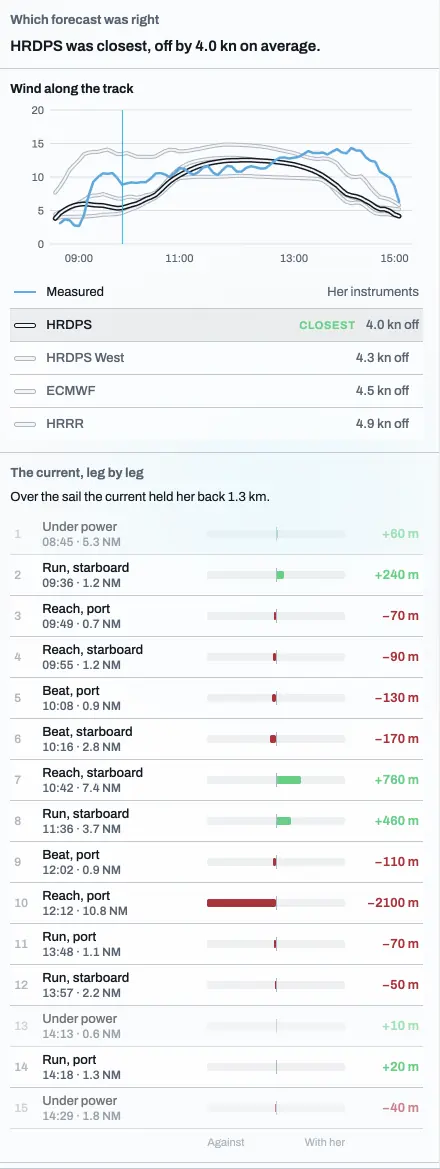
Set is the direction the water moves you; drift is its speed. With a calibrated log, compare STW and heading with SOG and COG to measure it. After a sail, Telltale works out what the current did on each leg for you.
The Fraser River plume
The Fraser lays fresh water over the strait, moving on top of the tide.
At the mouth during freshet and a strong ebb, surface speeds of 3–5 kn are common; in the open strait, 1–2 kn without much wind. The edge of the plume often shows as a colour line.
References 4
Wind against current
Opposing wind and current shorten and steepen the waves.
A moderate breeze over a strong opposing current can build a short, breaking sea in a pass or at a river mouth. A pass that looks calm at slack can stand up an hour later as the current builds against the wind, so time those spots for slack or a fair current.
Picking a passage window
Combine current, wind and daylight.
Find slack or a fair current at each pass, check the wind for the same hour, and make sure you can still get there if you are an hour slow.
Sources and review
Official references checked on 2026-10-11. Product details and schedules change; the provider’s page is the current word.