

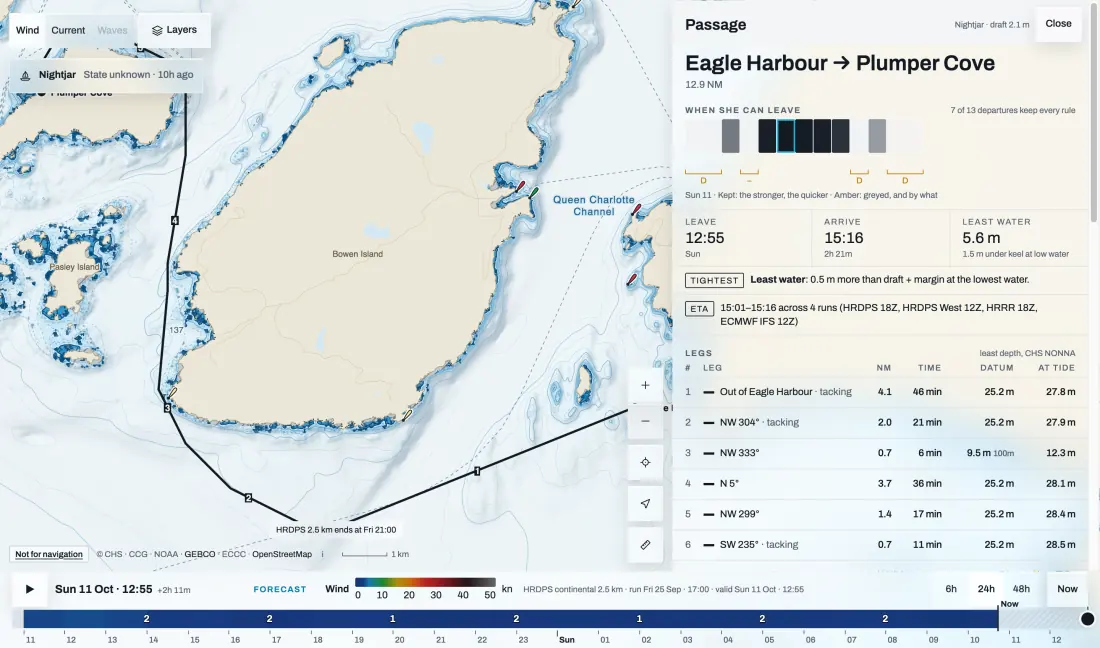
What a router needs
Your polar, your draft, the forecast and the currents. Without a forecast there is no route.
The polar gives her speed at each wind speed and angle; the confirmed draft keeps her in water deep enough. For the weather, Telltale takes the latest run of HRDPS, HRDPS West, HRRR and ECMWF IFS. For the water: CIOPS currents, CHS predictions at five passes, tide heights from IWLS, and daylight. Where no forecast covers the time, there is no route.
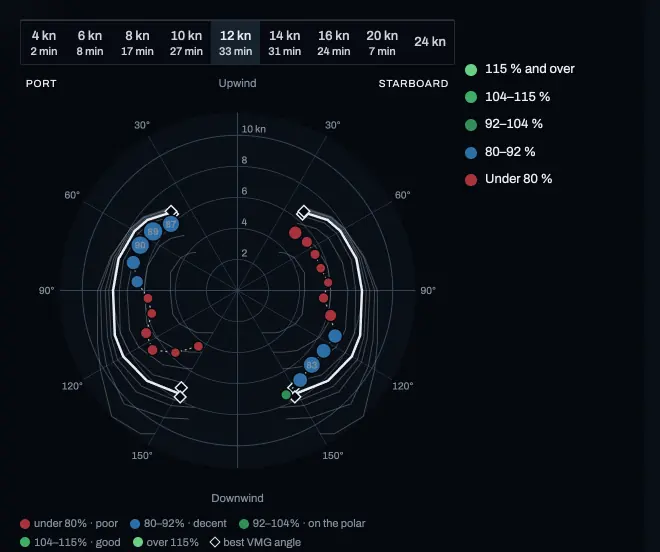
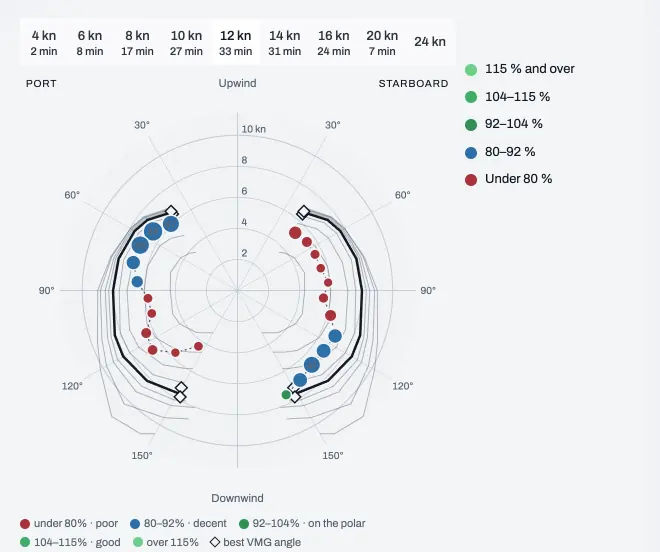
Every departure, sailed
Each start time in your window is routed; the ones that break a rule are greyed with the reason. That is when she can leave.
Telltale sails each departure in the window, up to 200 of them. One that would break a rule below is greyed, with the first rule it breaks. The rest are under When she can leave; pick one to see its arrival time and the tightest margin on the way.
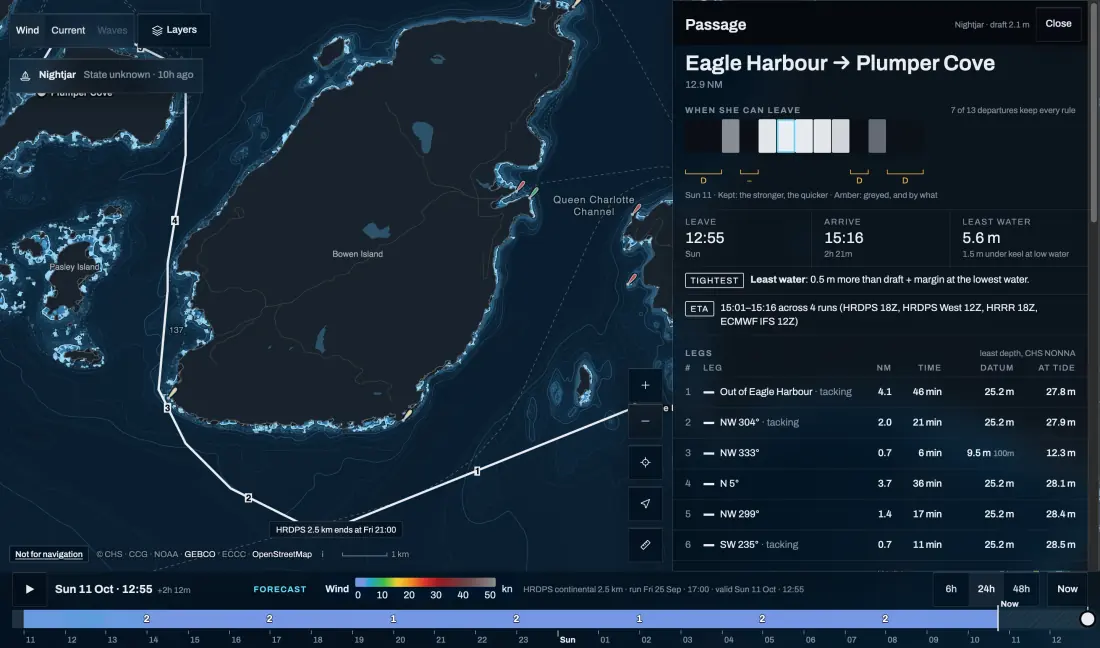
One route per model
HRDPS, HRDPS West, HRRR and ECMWF each give an arrival time. A wide spread means an uncertain day.
Each model is sailed as its own forecast, so the plan shows the spread of arrival times across them. A spread of a few minutes is a settled day. An hour or more means the wind is uncertain: plan for the slow arrival, and read the models again before you go.
To check against another router, export the route as GPX, or open a PredictWind GPX beside it.
Safety margins
Depth with a margin, distance off hazards, traffic lanes crossed square, Whiskey Golf, and limits tested against the worst model.
These are the floor: no setting turns them off.
- Water deeper than her draft plus a margin, at the lowest predicted water.
- 100 to 150 m off charted hazards.
- Traffic lanes crossed at right angles.
- Whiskey Golf avoided unless you confirm it is inactive.
- Your wind and gust limits tested against the worst model, not the average.
Race routing
Leg by leg, with the side to leave each mark, gates, laps and lines.
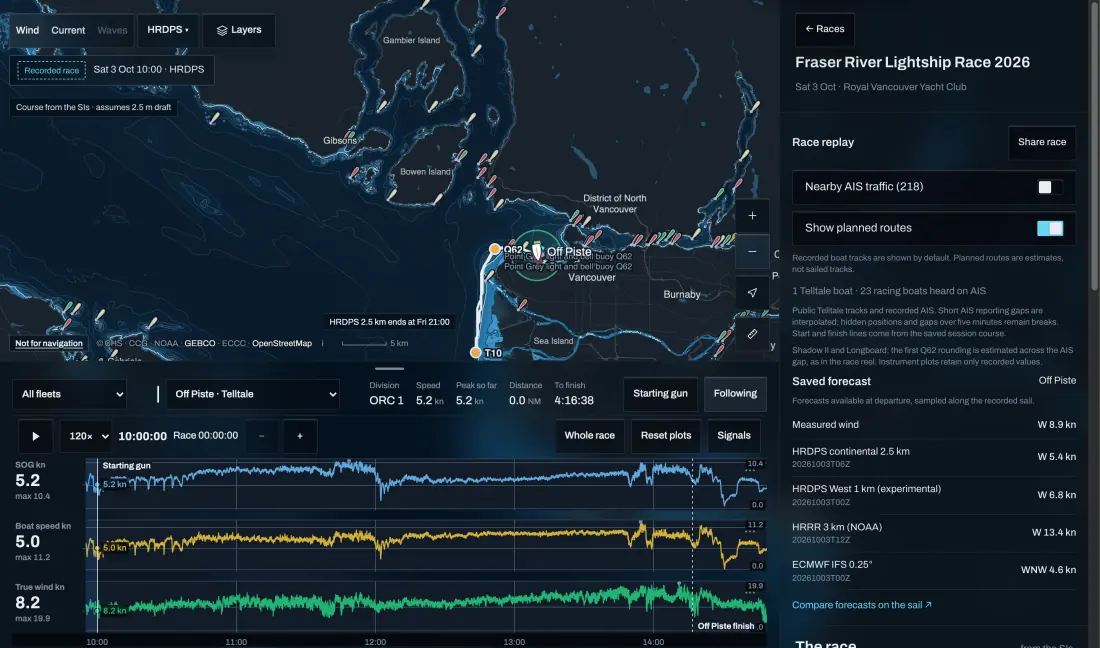
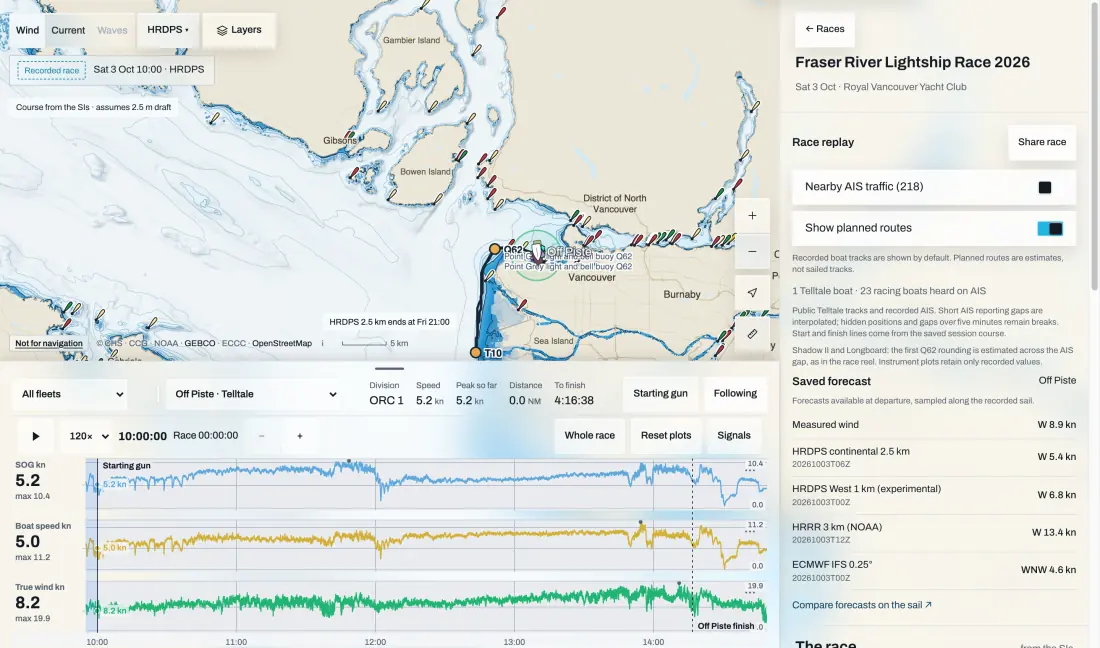
For a race, Telltale routes the course one leg at a time from the start line: each mark with the side to leave it on, gates, laps and the finish. A race’s page lays the course from the sailing instructions over the chart, leg by leg, for an assumed draft.
Save it and follow it offline
Routes stay on the phone. Offline it sails from your polar and the live wind.
A route saves as you plan it and syncs to the boat. Without a connection the phone keeps following it: arrival from your polar and the live wind, the next waypoint as you reach each one, and a buzz when you are off course. A new forecast or a reroute needs a connection.
What it leaves out
No waves yet, and no guessing past your polar’s strongest wind. Not for navigation.
Waves are not part of the routing yet. Above the strongest wind in your polar, Telltale does not extrapolate. Tacks and gybes are taken at the best VMG angle. A route is a suggestion for planning: keep official charts aboard, keep a lookout and check every leg yourself. If she doesn’t make the polar’s speeds, every arrival time is early, so check the polar against a few recorded sails.
Sources and review
Official references checked on 2026-10-11. Product details and schedules change; the provider’s page is the current word.